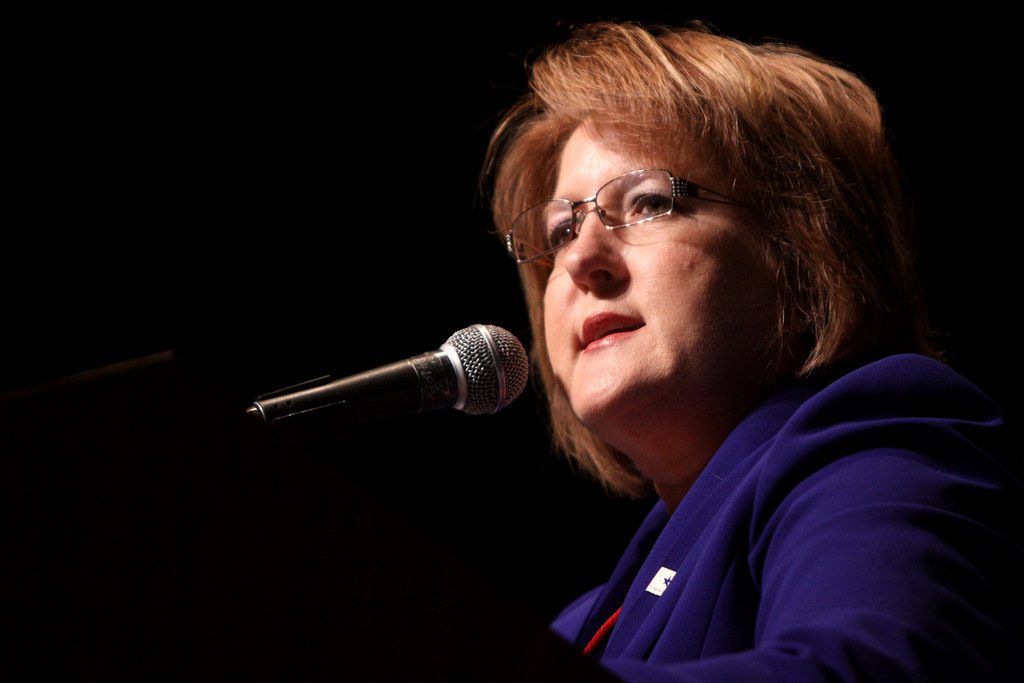
Sep 15, 2010 by Debra Medina |
The reality of the Texas economic condition finally seems to be showing up on the radar screen of some media and elected officials. The hardship, of course, is not new to working Texans. Those in the private sector have been feeling the pinch for well over two years now. While the Texas legislature will have to grapple with a budget shortfall now predicted to be $21 billion, there is a silver lining in this very dark economic cloud: pain and hardship force change. Texans have had enough political rhetoric and “conservative” talk and are now engaging to reject the big government mentality that seems to afflict all levels of government.
Not only is there pressure to reduce the size and scope of government, Texans are dusting off the history books and rediscovering the principles of freedom. There is a renewed grasp of the concept that private property ownership is essential to freedom and an understanding that therein lies the key to economic prosperity! Sure, some just hate the huge property tax bill, some despise the lack of accountability and transparency, but many are coming to understand the property tax is a tool being used by government to gain more and more control over the lives of individual Texans.
We’re continuing to shed light on the true economic condition of our state and to demonstrate the relationship between our current hardships and our systematic destruction of private property. We’re coming to understand the reality of the economic philosophy that recognizes private property ownership is the single greatest contributor to prosperity; without it, people suffer and economies fail to produce and prosper.
While many want to see the elimination of property tax, there has been concern about how to fund local government and schools. Texans have rightly stood strongly against any form of state income tax (though many would point out that our current business franchise tax is just that, an income tax on businesses). The question arises, “Can a sales or consumption tax fund local and state government?” A Texas Public Policy Foundation study released in April 2009 responds with a resounding “ABSOLUTELY!” The study demonstrates that not only can sales tax be used, it should be. The economic gains cited include significant increases in net personal income as well as the creation of hundreds of thousands of new jobs. There is recognition that not all taxes are created equally—the method of taxation is every bit as important as the amount. Comparatively speaking, a sales tax is the least onerous tax. For example, American economist Henry George said: The mode of taxation is, in fact, quite as important as the amount. As a small burden badly placed may distress a horse that could carry with ease a much larger one property adjusted, so a people may be impoverished and their power of producing wealth destroyed by taxation, if levied any other way could be borne with ease.
After 18 months of intense research and study, a proposal to eliminate both property tax and the business franchise tax is being submitted to the Texas Legislative Council. Under the current tax structure, Texas consumers and businesses pay $65 billion in sales, property and business franchise tax. Consumers bear nearly 45% of the total tax burden and many are being taxed out of their very homes. By eliminating property and franchise tax and using a two-tiered business and consumer sales tax, Texas can fund schools, local and state government and benefit from the economic stimulus associated with the restoration of true private property ownership.
The proposal anticipates a $16 billion/year reduction in the tax burden on Texas consumers and levies business tax in a proportionate manner. By increasing the state sales tax from 6.25% to 7.25% with no change in the tax base and assessing a 2.5% business sales tax, Texas can eliminate all property and business franchise tax while insuring people won’t be taxed out of their homes.
While the data puts to rest the inflammatory concern that the sales tax rate would have to be near 20%, as some have claimed, there remains a great deal of work to be done. The Texas Legislative Council will draft legislation. The Texas Budget Board and Comptroller’s Office will be asked to check and recheck the math. And consumers and businesses alike will have opportunity to study and evaluate the proposal.
Ultimately, the call is ours. Will we demand that we once again own our property in Texas? Will we have the courage to implement a fundamental shift in both the method and the amount of tax imposed on Texas citizens and businesses?
Throughout all history, those nations that have been most free and most prosperous recognized the right of private property ownership. The converse is also true; those people who have suffered under tyranny were denied the right of property. Recognizing that truth, we’ll either fight for it now, on the soap box and at the ballot box, or our children or grandchildren will be forced back to the ammo box to restore what we have squandered. This is not just an economic battle; it is a fight for freedom. Restore true private property ownership in Texas and set our state on a course to freedom and renewed prosperity. Eliminate property tax in Texas!